
Case summary
In the stray-current remediation project on the Jiangyin–Suzhou section of the Sunan Refined Oil Pipeline, Jiaozuo Libo Light Alloy Co., Ltd. participated in AC drainage facility construction, using zinc-ribbon grounding together with solid-state decouplers to protect against AC stray-current interference. Drawing on the on-site construction explanation, this case presents pipeline connections, coating repairs, zinc-ribbon laying and equipment installation, and describes quality-control points from underground connections to above-ground wiring.
Project background
The Jiangyin–Suzhou section of the Sunan Refined Oil Pipeline is directly buried and passes through areas including Wuxi and Suzhou. Project design documents record crossings and parallel alignments with several metro lines, exposing this section to stray-current interference. Remediation includes improvements to the cathodic protection system and installation of AC drainage facilities. For sections subject to AC interference, these facilities provide a path for AC interference current to flow from the pipeline to earth while accommodating the operating requirements of the existing cathodic protection system.
This case focuses on AC drainage construction within the project, including pipeline wiring, zinc-ribbon grounding electrode installation, and installation of test posts and solid-state decouplers. The accompanying video, narrated on site by Wang Weimin, records construction from excavation and pipeline location to backfilling underground facilities and installing above-ground equipment.
Remediation approach
This case uses zinc-ribbon grounding electrodes together with solid-state decouplers for current drainage. A cable connects the pipeline to a solid-state decoupler, which is then connected to the buried zinc-ribbon grounding electrode to form an AC drainage path.
The solid-state decoupler provides AC coupling and DC isolation. Within its specified DC isolation voltage range, it limits the loss of cathodic protection DC current through the grounding electrode while allowing AC current to pass. Zinc ribbon serves as the drainage grounding electrode, positioned as designed and surrounded by backfill material. Equipment selection, zinc-ribbon length, burial location and grounding performance must be determined according to the design requirements of each specific location.
Site construction and quality control
Construction begins by confirming the pipeline location. Mechanical excavation is combined with manual trial digging; as excavation approaches the pipeline, manual clearing protects the pipe body and its existing coating. Accumulated water is pumped out promptly. Before personnel enter, excavation walls and surrounding conditions are checked, and access routes and site protection measures are put in place.
Once the pipeline is exposed, the coating is locally removed at the designated connection point, and the connection surface is cleaned and ground. This operation treats the coating; connecting the cable does not require drilling a hole in the pipe body. According to the on-site construction explanation, pipe wall thickness at the welding position is measured before welding. The cable is then connected to the pipeline by exothermic welding using the appropriate mould and welding material in accordance with the confirmed welding procedure.
After connection, the weld is cleaned and checked for appearance, mechanical security and electrical continuity. Weld inspection and coating repair must be coordinated: the connection area and cable exit require sealing and wrapping with a confirmed repair system to avoid gaps or coating defects. After repair, holiday testing is performed using a spark detector. Any defects are repaired promptly and retested; concealed work is backfilled only after acceptance.
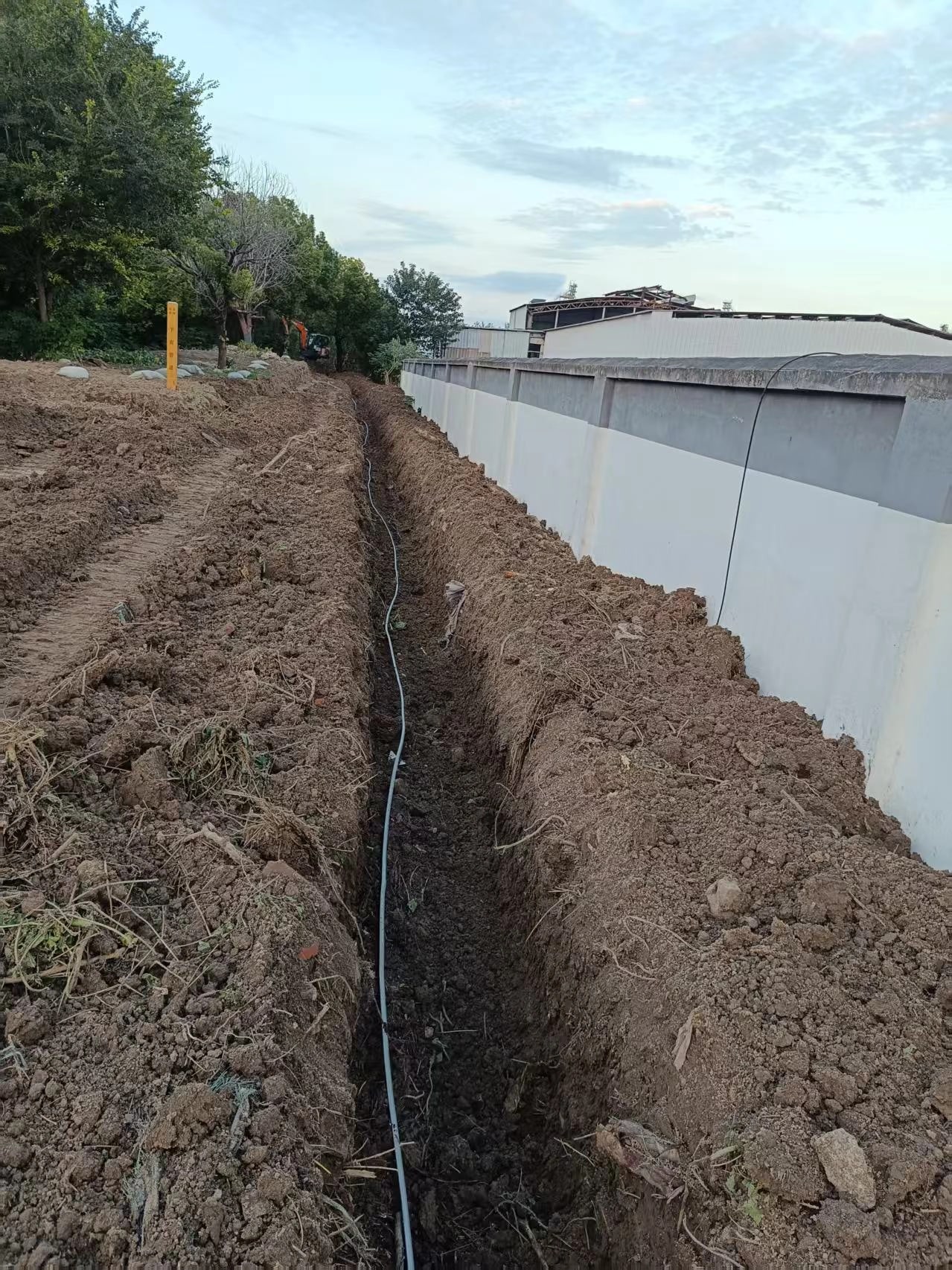
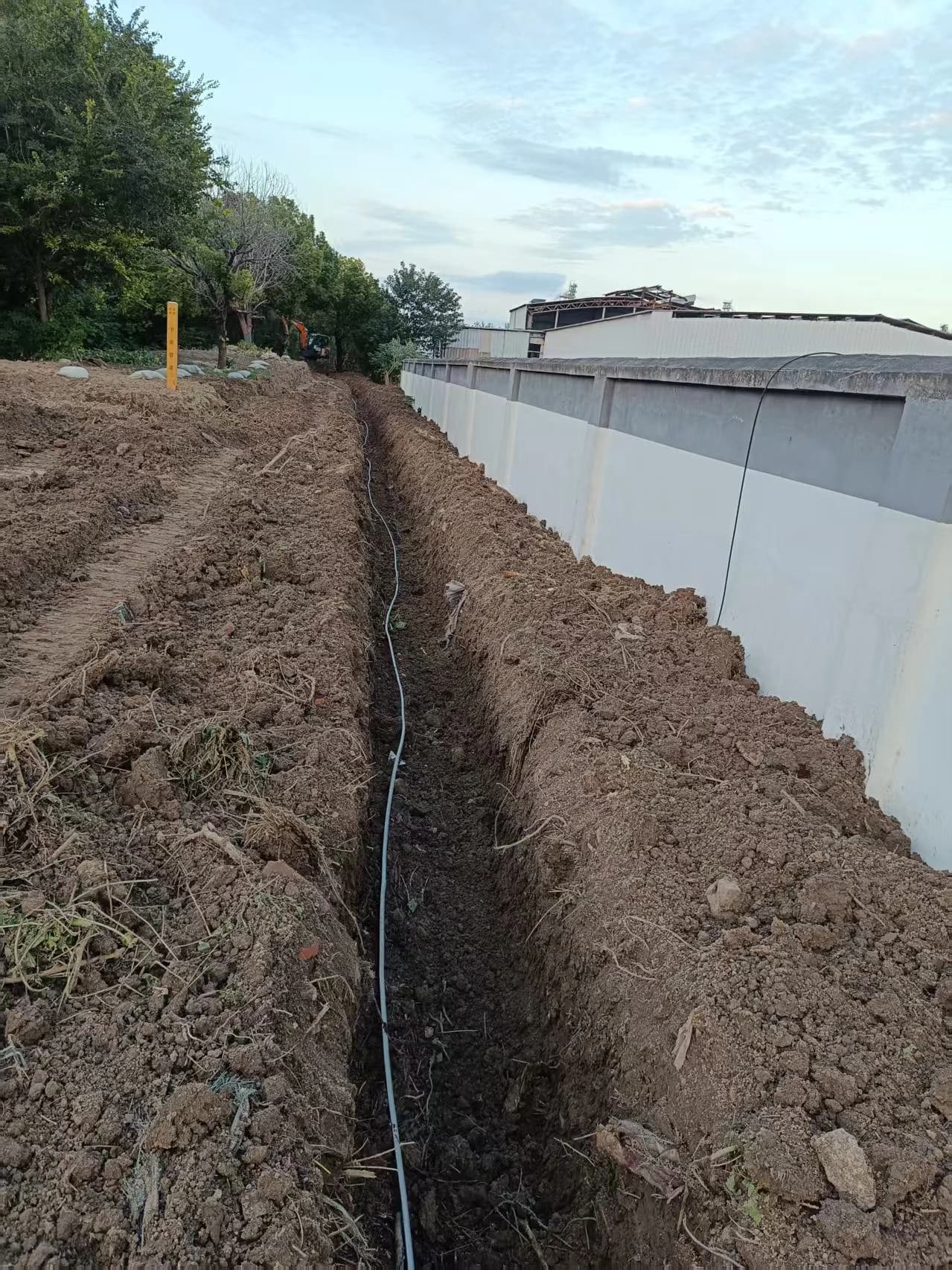
The zinc-ribbon trench is excavated to the designed location, depth and length. After the trench bottom is prepared, a bottom layer of backfill material is placed, followed by the zinc ribbon. Connections are completed and the ribbon is evenly surrounded with backfill material. Cables are laid to avoid unsupported spans, excessive tension and damage from sharp stones, with protection provided at connections. Before backfilling, the wiring, coating repairs, zinc-ribbon arrangement and backfill material are inspected and photographed, and concealed-work records are retained. Backfilling then proceeds in layers.
Above-ground work includes installing test posts, solid-state decouplers and associated wiring. Pipeline-side and zinc-ribbon-side cables are connected according to wiring requirements, terminals are protected, and cable functions and specifications are clearly labelled to support subsequent inspection, testing and maintenance.
Performance evaluation and operation and maintenance
After drainage facilities are installed, wiring correctness, installation security, insulation and labelling still require inspection. Grounding performance, AC interference and cathodic protection parameters must also be tested as required by the project. Remediation effectiveness should be evaluated against field test results. Drainage measures should be adjusted where necessary, and follow-up measurements used to assess operating conditions.
Quality control extends above and below ground: the reliability of pipeline connections, complete restoration of the coating at connection points, and installation of zinc ribbon and backfill material according to the design all affect facility performance. The accompanying video shows how these operations are implemented on site and provides a visual reference for understanding AC stray-current remediation on pipelines.